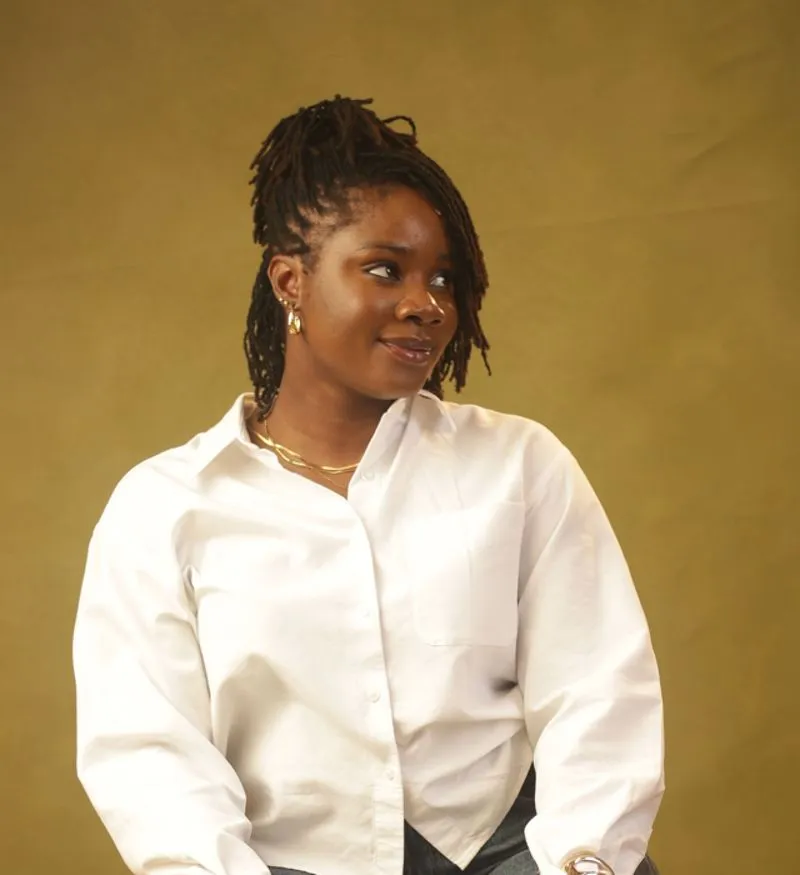
The short version
I'm a lawyer by training, now working in data protection and AI governance. I qualified and practised in Nigeria, did my master's in technology law at the University of Sussex, and now spend most of my working days helping organisations use data and AI in ways they can stand behind.
How I got here
I started out as a lawyer in Lagos. In Nigeria you can practise as both a barrister and a solicitor, so I did both: alternative dispute resolution on one side, corporate and commercial work on the other.
Then my firm invited a former colleague back to speak. She'd moved to the UK and was working in data protection, and she talked about it with so much enjoyment. Every day was different. I remember thinking: that sounds fun. I'd heard of laws like HIPAA, but I didn't really understand data protection. So I started reading, and the more I read, the more I wanted to know.
When I decided to do a master's, I wanted it to be about something I actually cared about, not a master's for the sake of one. (My dad is a professor, so "why not a master's?" was never a question that went away.) I'd already done a fair amount of technology and IP work in practice, so technology law made sense. I chose Sussex for its modules: cybersecurity, AI and data protection. They mattered enough that I turned down a scholarship elsewhere and paid full fees.
At Sussex I went deep. Data protection and AI both held my attention so much that I couldn't choose between them, so my dissertation looked at both: the GDPR alongside the EU AI Act, and whether data protection law gets in the way of innovation. Generative AI arrived while I was studying, and suddenly everyone was talking about AI governance. I went to conferences, spoke to people, and realised this was the work I wanted to do.
Since then I've worked on privacy at a technology company, at LexisNexis, where I advised engineering teams on responsible AI and bias, and now in financial services, where assessing new AI tools is part of my day-to-day. What started as something I hoped to do is now simply part of the job: looking at new tools, talking people through the risks, and making sure we protect the people behind the data and the business at the same time.
I'm still learning, through courses, communities and a lot of conversations.
How I think about privacy
Good privacy work is thorough. It protects the people behind the data and still lets the business do what it needs to do.
It's a balance, and sometimes it leans one way more than the other. My job is to make sure privacy is never a hindrance to innovation.
Credentials
Beyond the job title
During my degrees, I didn't just want to go through university. I wanted it to go through me. I was President of the Maritime Forum during my undergraduate degree, a campus ambassador for Law School 2.0, and I won the Spirit of Sussex Gold Award during my master's at Sussex. I like meeting people, and those roles gave me plenty of chances to do it.
They turned out to be good preparation. So much of privacy work is conversation: walking someone through a supplier approval, or explaining why a control matters and how to do things better.
Outside work, I travel as much as I can, and yes, I think about my digital privacy as carefully as my physical safety when I do. I'm also happiest around plants.